Destination 02 · Canas, Cusco region
Q'eswachaka — The Living Inca Bridge
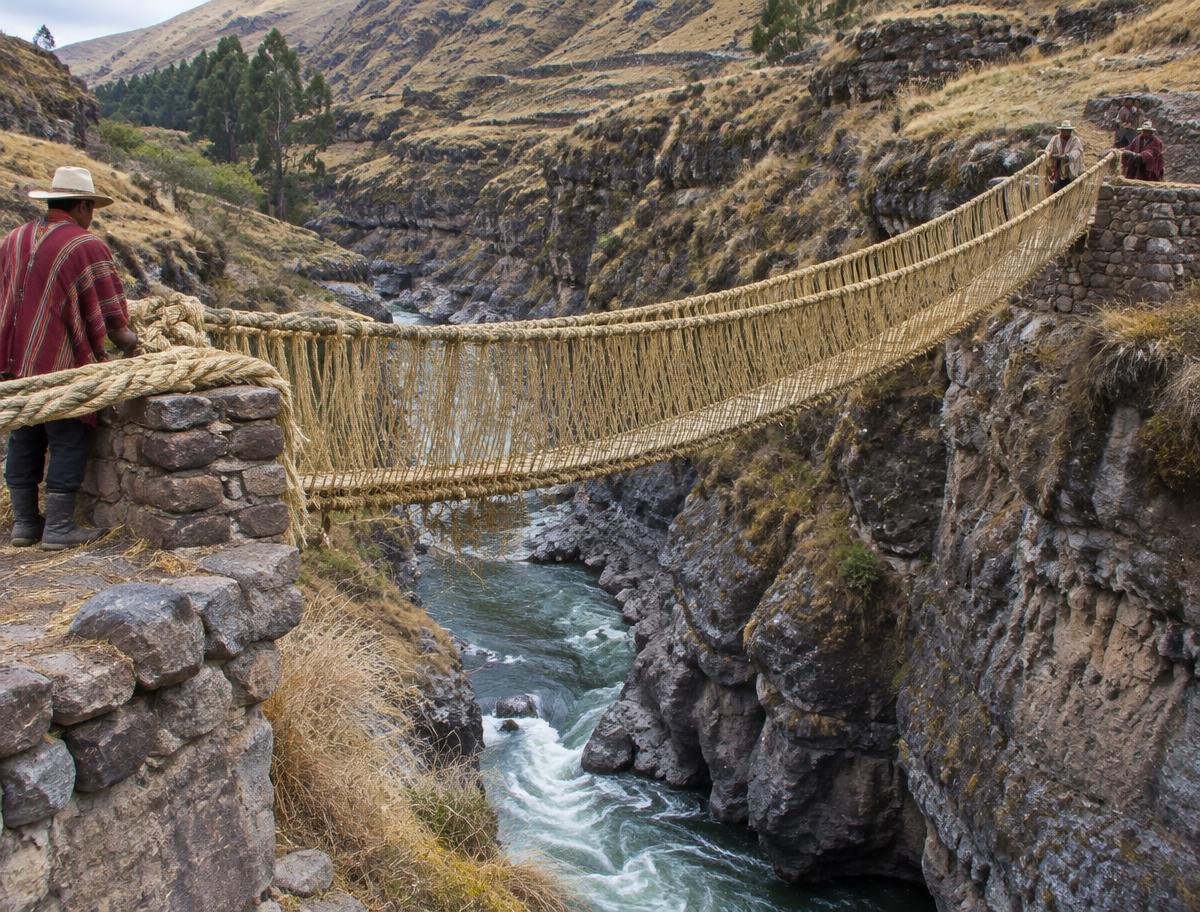
A bridge woven from grass, rebuilt by hand every year over a gorge of the Apurímac.
Where it is
PracticalQ'eswachaka crosses a narrow gorge of the Apurímac river in the district of Quehue, province of Canas, south of Cusco. The landscape is high and open, and the bridge appears suddenly between rock walls.
A tradition, not a ruin
Archaeological evidenceThe Inca road system relied on suspension bridges of woven plant fibre to cross deep valleys. Q'eswachaka is the best-known example still maintained in the traditional way. The knowledge, rituals and collective work involved in its renewal were inscribed by UNESCO on the Representative List of the Intangible Cultural Heritage of Humanity in 2013.
How it is rebuilt
Each year, families from neighbouring Quechua-speaking communities gather grass and twist it into thin cords, which are then braided into thicker cables. Over several days the old bridge is cut away and a new one is stretched across the gorge and woven together. The work is divided by tradition and accompanied by offerings.
Why it matters
The bridge shows something that stone ruins cannot: engineering knowledge kept alive through practice. It belongs to the communities that maintain it, and its renewal is first of all their event, not a performance for visitors.
Visiting respectfully
PracticalIf you attend during the renewal, keep a respectful distance from the work and from ceremonies, and follow the guidance of community members. Practical details on this page are an early draft. Check opening hours, entry tickets, road conditions and local guidance before you travel.